


So Your Dog Needs a Social Life…

So you feel like your dog is becoming a little housebound. Maybe he spends his days lazing around on the couch, letting his muscles waste away to nothing. Or maybe he’s the opposite – non-stop zoomies, he can never seem to settle down. Either way, you feel like he needs a little more exercise, maybe a little hang-out time with some new friends. So you start thinking about how to get him our of the house more. Great! But what to do…?

Day Care
One option is day care. Your dog goes to a place where there are lots of other dogs to play with, and they’re supervised by trained humans who are making sure nothing goes horribly awry. Sounds awesome, but how do you find a good one? First, do some basic research. Google day cares in your area. Check out their websites (they should definitely have a website, don’t go anywhere that doesn’t). Check out their testimonials (which should be on their website), read their online reviews, talk to your vet and people in your area who have dogs – see if they know anything about them.
Talk to Them
Once you’ve found a few you’re interested in, start making calls. Then simply speak to them – are they nice? Are they willing to talk to you for as long as you need and happily answer all your questions? Don’t be afraid to ask questions, even if they seem weird! Ask literally as many as you can think of! Find out all their information:
How long have they been in business?
Are they a registered company?
Are they insured and bonded?
How many people do they have on staff?
What’s the staff to dog ratio? It should be about 1:8 or 12 at most.
How do they train their staff? The staff should be trained in recognizing canine body language, how to notice stress/illness, and some basic obedience.
Are any of their staff certified in canine first aid/PR? This would be great, but if the answer is not, it’s not necessarily a dealbreaker. The next question, then, should be…
Are they affiliated with a veterinarian?
What do they do if there’s an emergency (fight, injury)? How will they let you know?
What’s Needed
There should be an extensive interview of your dog, to make sure he’ll get along with the other dogs, feel safe and happy there, and be able to follow the commands the staff uses to direct the dogs’ behavior.
They should require all basic vaccinations (rabies, bordetella, DHPP)
They should require a fecal test to make sure your dog doesn’t have any parasites (parasites are very contagious – if they’re checking your dog, they’re checking all the dogs, and that’s good).
If it’s a facility with an outdoor area, they should require him to be on some kind of flea and tick preventative.
What’s it Like?
How do they intro a new dog into the playgroup? It should be bit by bit, with a few dogs who are calm and soft-tempered, who won’t overwhelm a new dog who might be a bit nervous, not by just dropping your dog into the middle of the main playgroup as soon as he arrives.
What are the dogs’ days like? Ask for a play by play. Are they on a schedule? How much playtime vs. rest time?
Do they get down-time? They should! Dogs need to rest as much as they need to play. Ask what down-time is like – are they crated? In indoor-outdoor runs? In individual rooms? All in one big room? For how long?
Are the dogs separated by size? Play styles? Again, they should be. The Chihuahuas should NOT be playing with the Labrador Retrievers! As sweet as any dog’s personality might be, dogs of such differing sizes can hurt each other during play. Also, some dogs play by body slamming into each other. Others play by frolicking sweetly around the field. You don’t want the body slammers and the frolickers in the same playgroup.
How large are the play groups? (Smaller is better.)
What kinds of activities do they provide? Are there enrichment games?
Ask how they address unwanted behaviors. They should not be using aversives of any kind – no spray bottles, alpha rolls, shock collars, etc.
Do they give updates on your dog? Notes, report cards, calls to keep you updated on how your dog is doing?
Will they tell you if your dog’s not happy? This is important. Not every dog loves day care, and not every day care facility is right for every dog. Some dogs do better in a bigger place, some in a smaller – they should prioritize your dog’s comfort and happiness over keeping a client.
Visit!
Okay, so you’ve spoken to the people at the facility, you feel good about their answers to your myriad questions, now what? Go for a tour! Ask to see the whole place. Ask to see specifically where your dog will be playing, and to watch a play session. Ask to see where your dog will be during down-time. There should be no hesitation about letting you do all of this. If there is, leave. That’s a dealbreaker. During your tour, watch how the dogs are acting – do they seem like they’re having fun? Are they active and playing? Watch the staff – are they interacting with the dogs? Are they playing with them and keeping a close eye on them? (No one should be on their phones!) See how many dogs are there – it should be a reasonable number; the dogs shouldn’t be crowded in on top of each other. There should be plenty of room for the dogs to get away from each other if they want to.
Take a good look at the facility itself. Pay attention to how clean it is, see if it smells (it’ll probably smell like dogs, but it shouldn’t smell gross, like urine, feces, or mildew). Look to see that everything is in good repair. The fences should be at least 6 feet high, in excellent condition, and they should use a double-gate system.
Some places will have webcams, some won’t. If they have them, great – you’ll be able to see what your dog is doing – but if not, it doesn’t mean anything bad. Most places that don’t have them will have someplace else (e.g., Instagram, Facebook, etc.) where you can see pictures and videos of all the dogs playing.
Sign Up
If you’ve asked all your questions and gotten good answers, seen the place and feel good about the staff and the facility, then great! Schedule your dog’s test day. If it’s successful and he gets in, stay in touch with them for the first month or so that he goes – call once a week or so to see how he’s doing. Any reputable day care will tell you if your dog is settling in well, having fun, and getting along with the other dogs. If all’s going well, congratulations! You’ve found a day care.
Important
Daycare is not right for every dog. Dogs who are highly social, enjoy active play, and have solid basic manners tend to do really well, but that is by no means every dog, or even most dogs. In fact, probably about 50% of dogs don’t love day care, especially once they start to approach full adulthood (at about 2-4 years, depending on the dog). As they get a little older, they start to become more selective about their friends. That’s not to say they don’t want to play with other dogs, just that they might be happier playing in a yard with 3 or 4 of their neighborhood buddies, rather than going to a facility where they might have to spend hours with as many as 12-15 other dogs.
Dogs who are fearful, dog-reactive, resource guarders, or are easily overwhelmed by loud noises or a lot of commotion would definitely find daycare stressful rather than fun. A lot of people think they need to “socialize” their shy or reactive dog to get them over that issue. YOU DO NOT. Don’t force your dog to do something that might make him uncomfortable or scared. If you have a shy, fearful, or reactive dog, call a behaviorist (like me!) and ask them the best way to get your dog over their issues.
Finally, senior dogs or dogs with mobility issues aren’t great candidates for day care. Let your old dog stay home and relax! At most, I’d recommend a dog walker, to keep them in shape and get them out of the house.
Which leads me to…
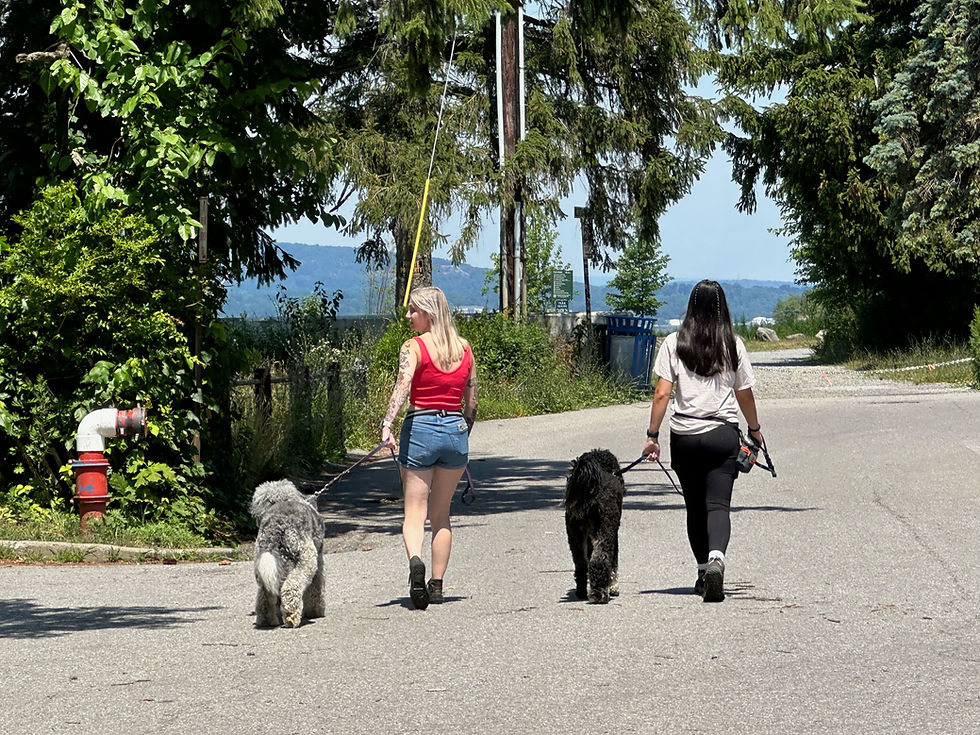
Dog Walkers
If day care isn’t necessarily the right thing for your dog – which is fine! – consider a dog walker. Your dog will get out and about, he’ll get some exercise, he’ll get some sniffing time in, he’ll get some attention and play – awesome! But, as with choosing a day care, there are things to keep in mind when choosing a dog walker.
What Kind of Walk?
First, decide what you want: individual walks? Group walks, off-leash hikes? Keeping in mind, of course, not what you think would be coolest, but what your dog will like and succeed at. Like, if your dog has a terrible recall, as awesome as off-leash hikes in the woods sound, that would not be the best thing for him. Or, if he’s even sometimes a little growly with other dogs when he’s on leash, a group walk probably wouldn’t be his thing. So take into consideration what your dog will be able to do and what he’ll enjoy the most when you make your decision.
What Kind of Walker?
Now that you’ve made that decision, the most important thing is that you find someone who’s experienced and reliable, who you (and your dog!) like and feel comfortable with. It should be someone with lots of experience in walking dogs, and some background in canine behavior and basic positive training methods. It would be great if they were certified in canine first aid and CPR, but that’s not necessarily a dealbreaker. They should definitely be insured and bonded, though, and there should definitely be a contract you sign, that outlines their services and policies.
Now it’s back to Google, friends who have dogs, your vet, your groomer (if you use one), and local pet stores. See who they recommend. Start making calls. Once again, you’re going to ask lots of questions.
What to Find Out About Your Potential Walker
Dog walkers work individually and for dog walking companies. If it’s an individual:
Make sure they’re insured and bonded.
Get references and check online reviews.
Make sure they have experience with lots of dogs of lots of different breeds.
Ask if they have a background in at least a little basic obedience.
Find out how long they’ve been walking dogs.
Find out how communicative they are – do they send you pictures of your dog? Will they leave you notes/updates on how he’s doing?
Make sure they won’t use any aversive, like choke chains, prong collars, or shock collars.
Ask what kind of backup plan they have if they get sick or have an emergency and can’t make it.
What would they do if your dog got away from them? How do the ensure that won’t happen? (A dog walker should have a way to be sure your dog does not get away from him. Maybe they double clip the leash, maybe the walker has the leash around their waist, maybe the dog is clipped to an extra carabiner. And just fyi, if your dog does (God forbid) get loose, the walker should not chase after him. They should do something like call him as they jog diagonally away from him, squeaking a toy or tossing treats, they could try falling on the ground and calling him, or any other option that encourages the dog to come to them.)
How do they handle an off-leash dog running up to them? (A good thing to do is to throw treats at the other dog and, while that dog is eating them, take your dog away.)
What would they do in case of an emergency, for example, if your dog was injured in some way?
Are they affiliated with a local veterinarian?
Where would they be taking your dog for his walk?
If they’re driving him anywhere, how is he transported? How is he secured in their vehicle?
What If It’s a Company?
If you’re working with someone from a dog walking company, make sure they have a website, that they’re a registered business, that they’re insured and bonded, and that they have lots of good reviews. You’ll be asking most of the same questions as you’d ask an individual walker, but also:
Find out from the owner if they do background checks.
Ask how they train their walkers.
Find out if they have a social media presence (they should).
Ask if there’s only one person who’ll be walking your dog (and coming into your house), or if it’ll be any of several people from their company.
Meet With Them
After you find out all those things, set up a meeting. You want to see how the person is with your dog. Take a trial walk with them – see how your dog reacts to the person (and trust your dog’s judgement! If he seems nervous, shy, or unwilling to walk with the person, that doesn’t necessarily mean there’s anything wrong with them, it just means they might not be the right walker for your dog). Get a feel for how they handle your dog. If you know there are situations where your dog has a hard time (like, he always goes mental when you pass by the house where the dog is out on the electric fence all day, or at the school when the kids are out during recess, or at that one park where all the squirrels congregate), go there to see how the walker handles it (do warn them first, though! It’s not fair to set someone up to fail).
Set Up a Test Walk
If all goes well – you’re satisfied with all the answers to your questions, your dog and the walker get along famously – great! You have a dog walker. Do the same thing you would with the day care: over the course of the first month or so, check in regularly. Ask how your dog is doing, if he’s having fun, if the dog walker is having any issues with anything, etc. It’s fine to ask questions and to check in. Anyone who cares about your dog will never feel like you’re bothering them – they’ll want you to know he’s happy and having a great time!
As always, if you ever have any questions about finding a day care or dog walker, or if you have questions about a place or person you’re considering, or if you’d like help finding a day care or dog walker, you can call me anytime. I’m here to help with whatever you need.
– Joanne


Comments